
Can you imagine what the world would be like without music? No gentle lullabies? No romantic serenades? No lively popular songs? No moving symphonies? And no anthems that carry whole crowds? For most people, a world like that would be dull and colorless.
Music touches practically every human sense. It can calm, excite, cheer and inspire. It can also make us euphoric or bring us to tears. There is no doubt that it touches the heart. But why does music have so much power? It speaks directly to the emotions, and it is present in every culture and every period of human history.
That is why it deserves to be valued. It should also be wholesome and available to everyone.
The history of music is very old. Archaeological discoveries show, for example, that centuries before the Common Era, African tribes played drums, horns and bells.
The ancient Chinese played a kind of harmonica and panpipes. The peoples of Egypt, India, Israel and Mesopotamia played the harp.
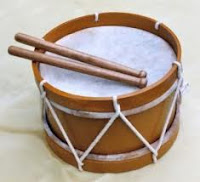


One of the best-known ancient references to music is in the book of Genesis (4:21), which says that a man named Jubal was the father, or “founder”, of all who play the harp and the pipe. Many centuries later, King Solomon of Israel showed great interest in music and obtained the finest wood available to make harps and other stringed instruments (1 Kings 10:11, 12).

Naturally, to hear instrumental music back then, you would have to play an instrument yourself or listen to someone playing. Today, however, millions of people can access music at the touch of a button or the click of a mouse.
So, starting with this blog, let us develop the talent we have and learn to sing the right way, because the human voice is the finest, most complex and most perfect instrument ever created.
Remember that this blog is only a support: training and questions should be handled through messages or email. And never stop practicing, because persistence and dedication are what will determine your success.
Music Basics
1. CONCEPT
– What is music?
Music is the art of expressing the many feelings and emotions of our soul through sound.
– There are 3 (three) fundamental elements that make up music:
MELODY, HARMONY and RHYTHM
Melody is the combination of successive sounds (one after another).
Harmony is the combination of simultaneous sounds (all at once).
Rhythm is the combination of note values (musical writing, the score).
Melody and rhythm together already convey musical meaning (we can already tell it is music).
2. THE STAFF
The staff is a set of 5 (five) horizontal lines and 4 (four) spaces.
It is on the staff that we write musical language, that is, the language of instruments.
The staff is also called the STAVE or PENTAGRAM.

Note: the lines and spaces of the staff are counted from the bottom up.
3. MUSICAL NOTES
There are 7 (seven) musical notes. In English they are named with letters; in many other countries (including Brazil) they are sung with solfège syllables:
C (Do), D (Re), E (Mi), F (Fa), G (Sol), A (La), B (Si/Ti)
When these 7 notes are heard in succession, they form a series of sounds called a scale.
The scale is complete when it ends on the same note it started with (C, D, E, F, G, A, B, C).
Example:

Note: an ascending scale is one in which the notes move from low to high (bottom to top). A descending scale is one in which the notes move from high to low (top to bottom).

The staff alone is not enough to hold every musical sound our ears can enjoy. For this reason, we use lines called ledger lines, placed above or below the staff. Notes can also be written in the spaces formed by these lines (the spaces above and below the staff).
Note: in some methods they are also called imaginary lines and spaces.
4. CLEF
A clef is a sign placed at the beginning of the staff. It gives the notes their names and sets their pitch on the scale.
– There are 3 (three) clefs:
The G (treble) clef, the F (bass) clef and the C clef
The G clef is written on the 2nd (second) line of the staff. It is used for the human voice and for high-pitched instruments.
The F clef is written on the 4th (fourth) line of the staff. It is used for the human voice and for low-pitched instruments.
The C clef can be written on the 1st (first), 2nd (second), 3rd (third) or 4th (fourth) line of the staff. It has been used for alto, mezzo, baritone and tenor voices, and for some instruments such as the viola and the higher passages of the trombone.
Note: the 2 (two) most widely used clefs are the G clef and the F clef. They are used for all voices and for most instruments, including the most common of all, the piano.
I, André Mello, wish you a great study, and may you keep growing in the art of singing.